
What My Garden Taught Me This Week: Ep. 1 Seeds, Moon Cycles & Companion Planting
What My Garden Taught Me This Week
This post is a companion to Episode 1 of my new podcast series, What My Garden Taught Me This Week for all the extra detail, tangents, and the actual story behind each experiment: [Listen here] · [Watch on YouTube]
Welcome to the very first instalment of what I hope becomes a regular ritual: sharing what's actually happening in my garden - the wins, the experiments, and the random rabbit holes I fall down along the way.
Because that's genuinely how I garden. I'll start with one task, then something catches my eye, or someone asks a question, and suddenly I'm three tabs deep researching something completely different. I've stopped fighting it. Instead, I'm sharing the learning as it happens, mess and all.
This week alone took me through regenerative agriculture research, a new seed-germination method, something called seed snails, a companion-planting question about peas and onions, a big moon-cycle planting experiment, and a pest question that had me thinking about alyssum instead of spray. Here's the rundown.
My Snaplock Seed Experiment
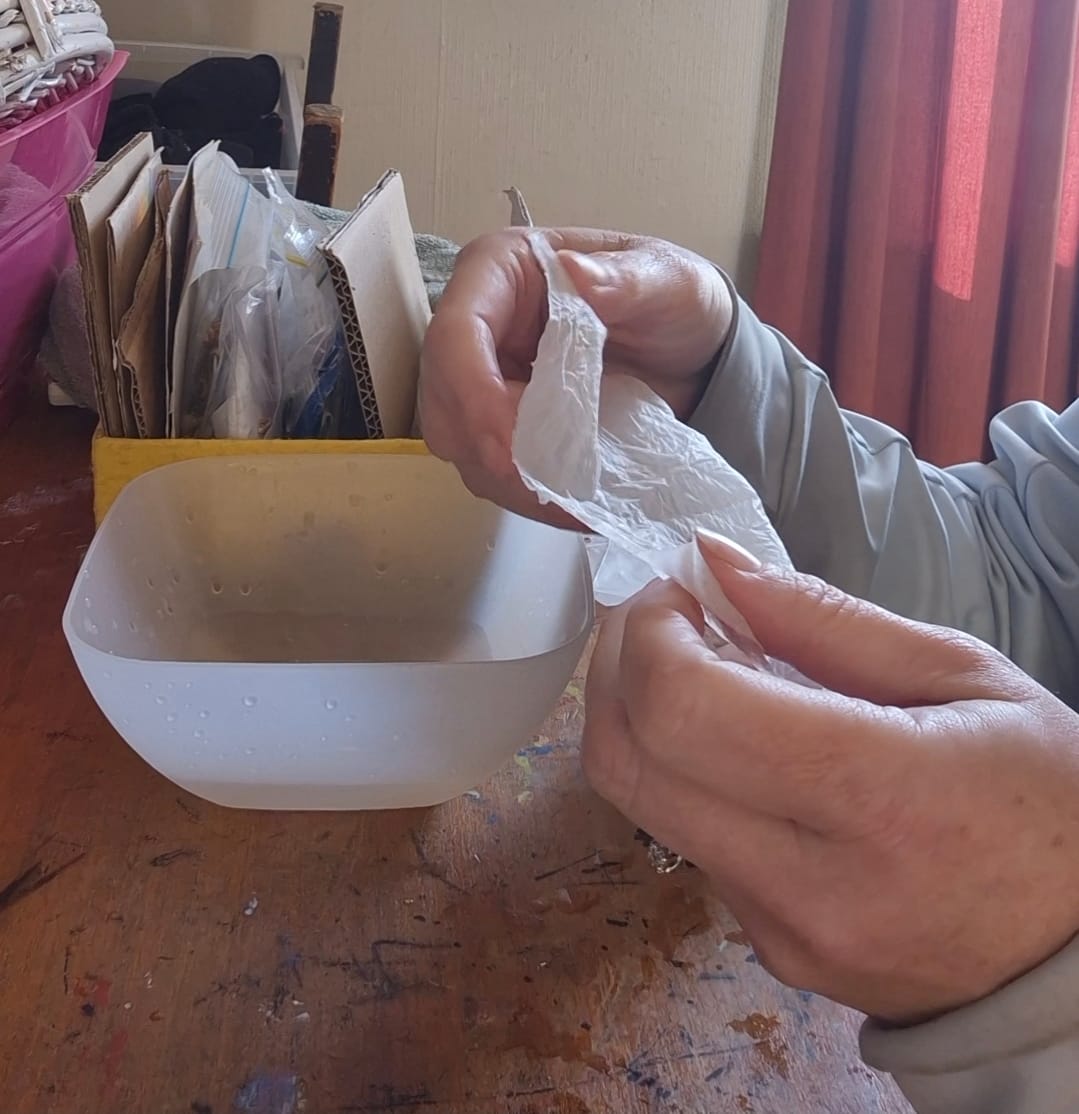
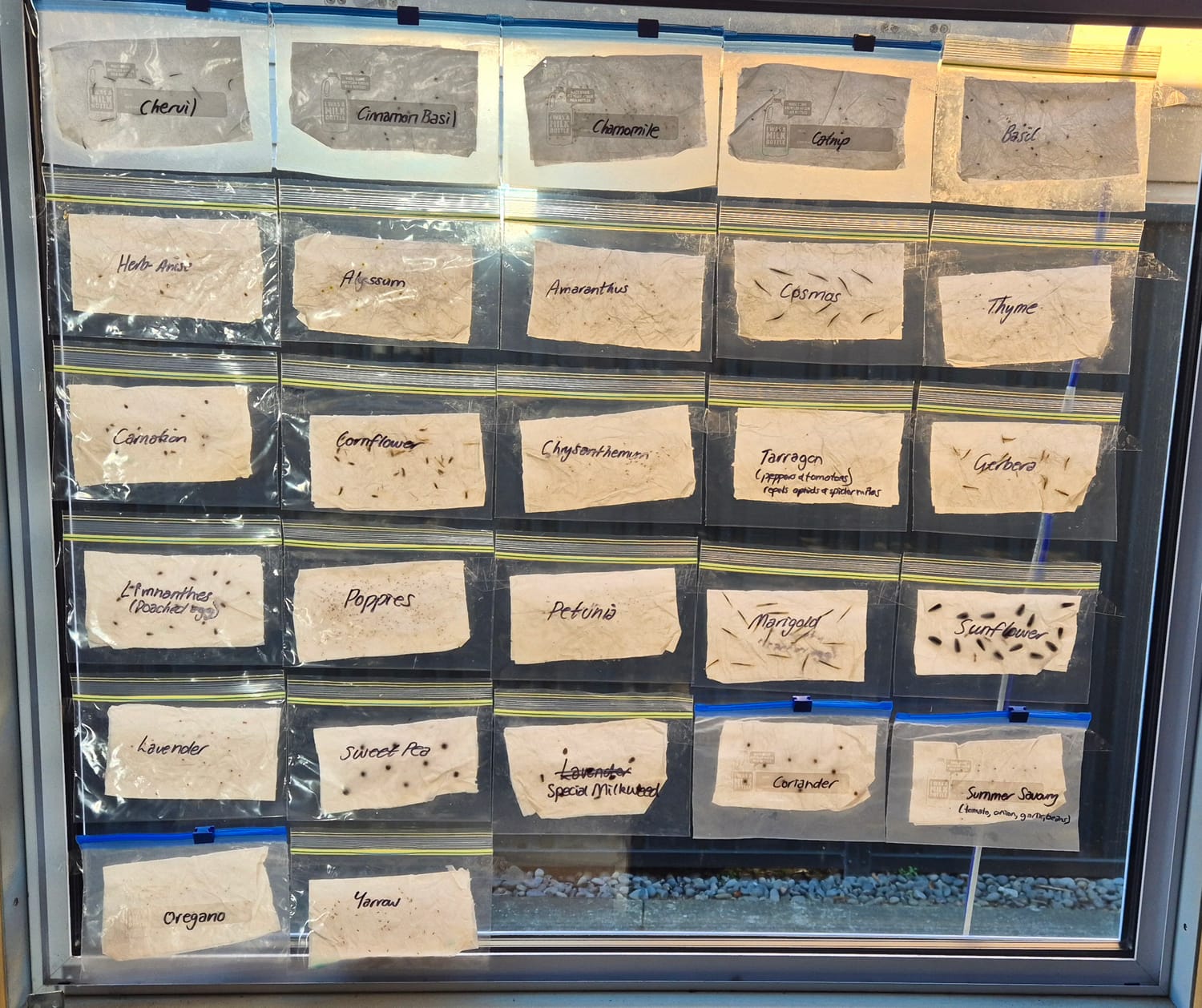
First up: germinating seeds in snaplock bags. I'd seen others do it but never tried it myself. The method is simple - dampen a paper towel, arrange your seeds on it, fold it to hold them in place, and seal it inside a bag.
You can watch the reel of how I did it HERE 😊😊
A few things I'm learning as I go: keep the bags out of direct light, and watch the moisture level so the towel stays damp without turning soggy. A light dusting of cinnamon apparently helps ward off fungal issues.
What I love most so far is the space it saves - no trays cluttering the windowsill - and the fact that I can actually see whether a seed is viable, instead of planting it in soil and waiting weeks to find out. The real test will be transplanting: germinating a seed is one thing, growing a healthy plant from it is another. That's what I'll be watching next.
Then I Discovered Seed Snails
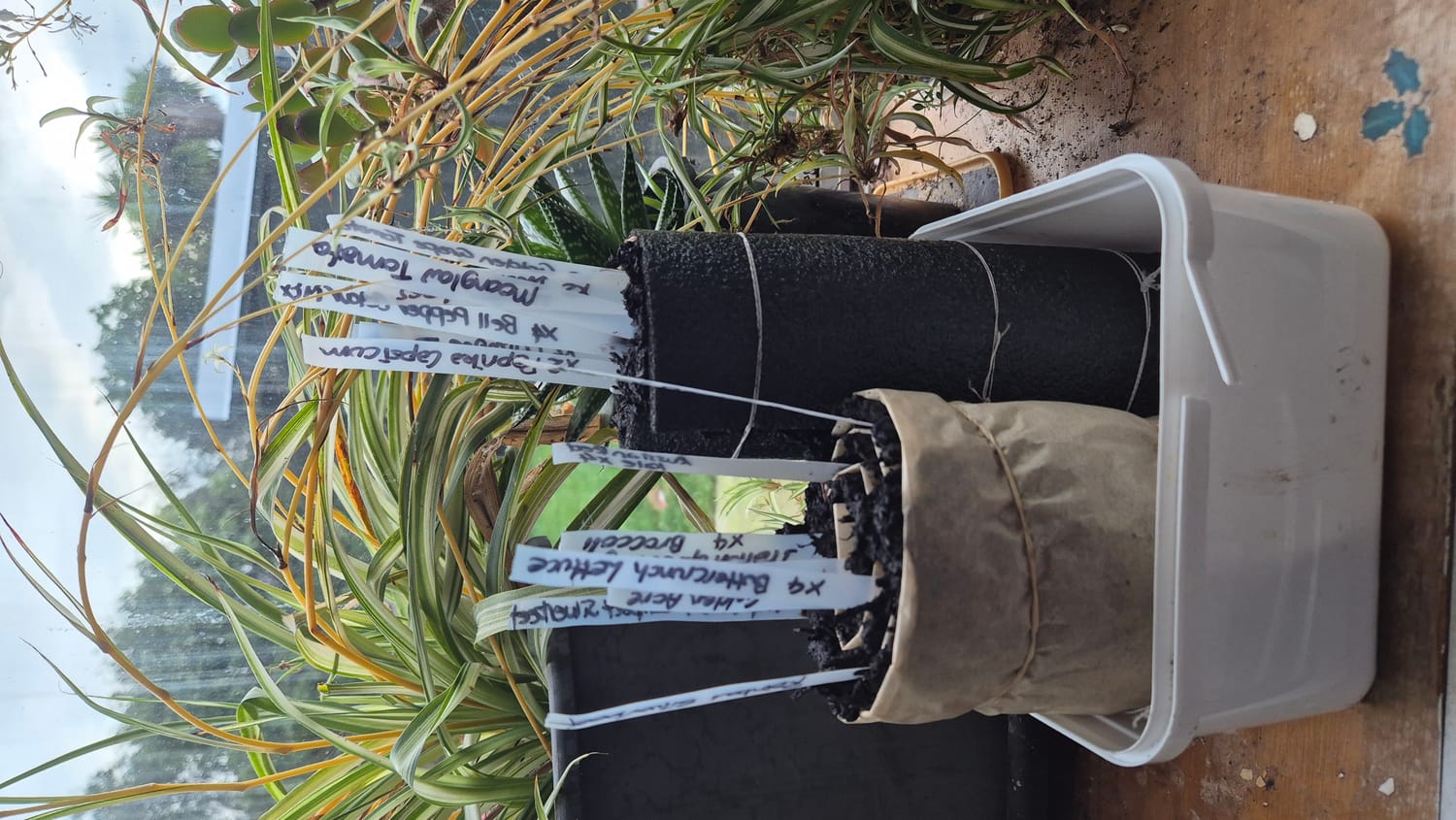
As if one seed experiment wasn't enough, I stumbled onto seed snails - seedlings arranged in a spiral so you can fit a surprising number of plants into a small space.
Beyond the space-saving, I'm intrigued by the transplanting angle: because seedlings grow along one contained strip, you can unroll the snail and separate them out rather than wrestling each one from its own pot. The trade-off is that there's not much growing medium to work with, so moisture management matters, and you don't want seedlings left in there too long or they'll get stressed and root-bound.
Nothing here is "the best way to grow seedlings." It's simply: interesting, let's try it, let's see.
The Question About Peas and Onions
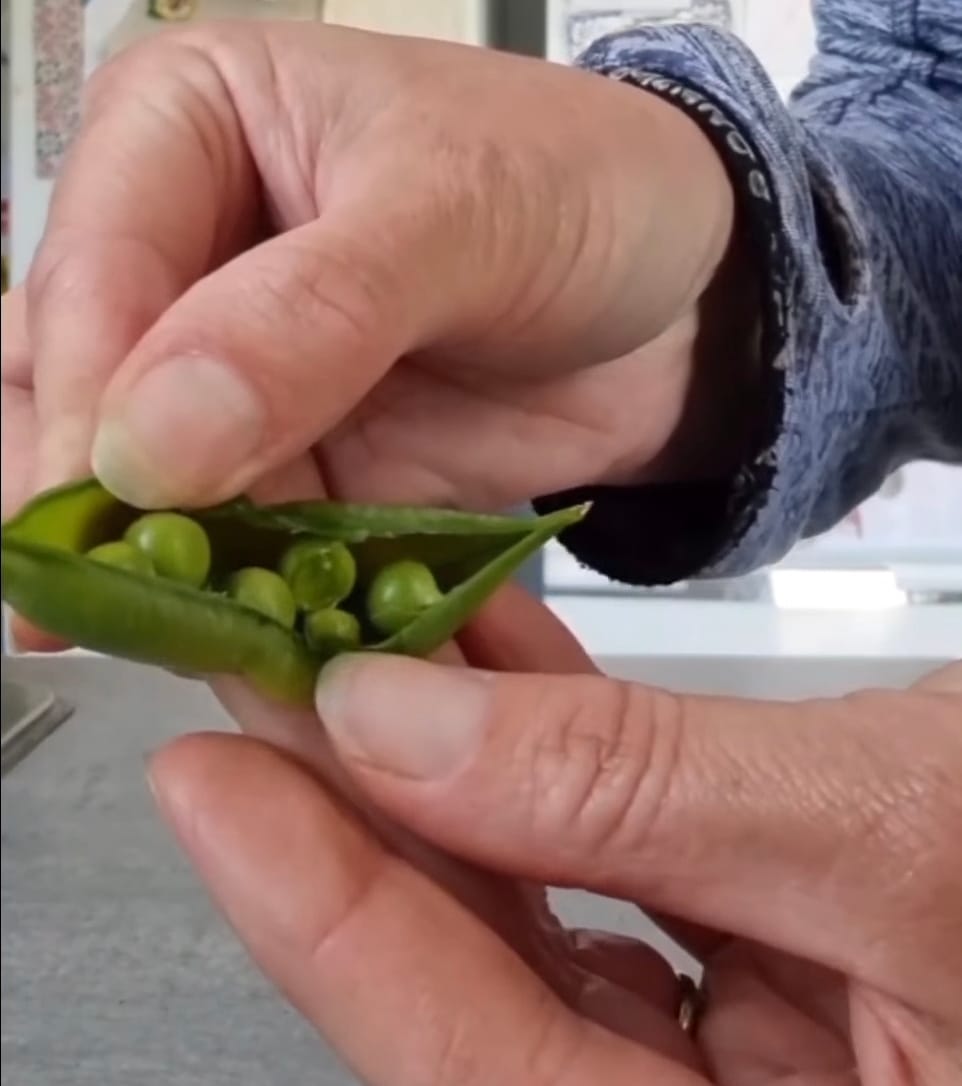
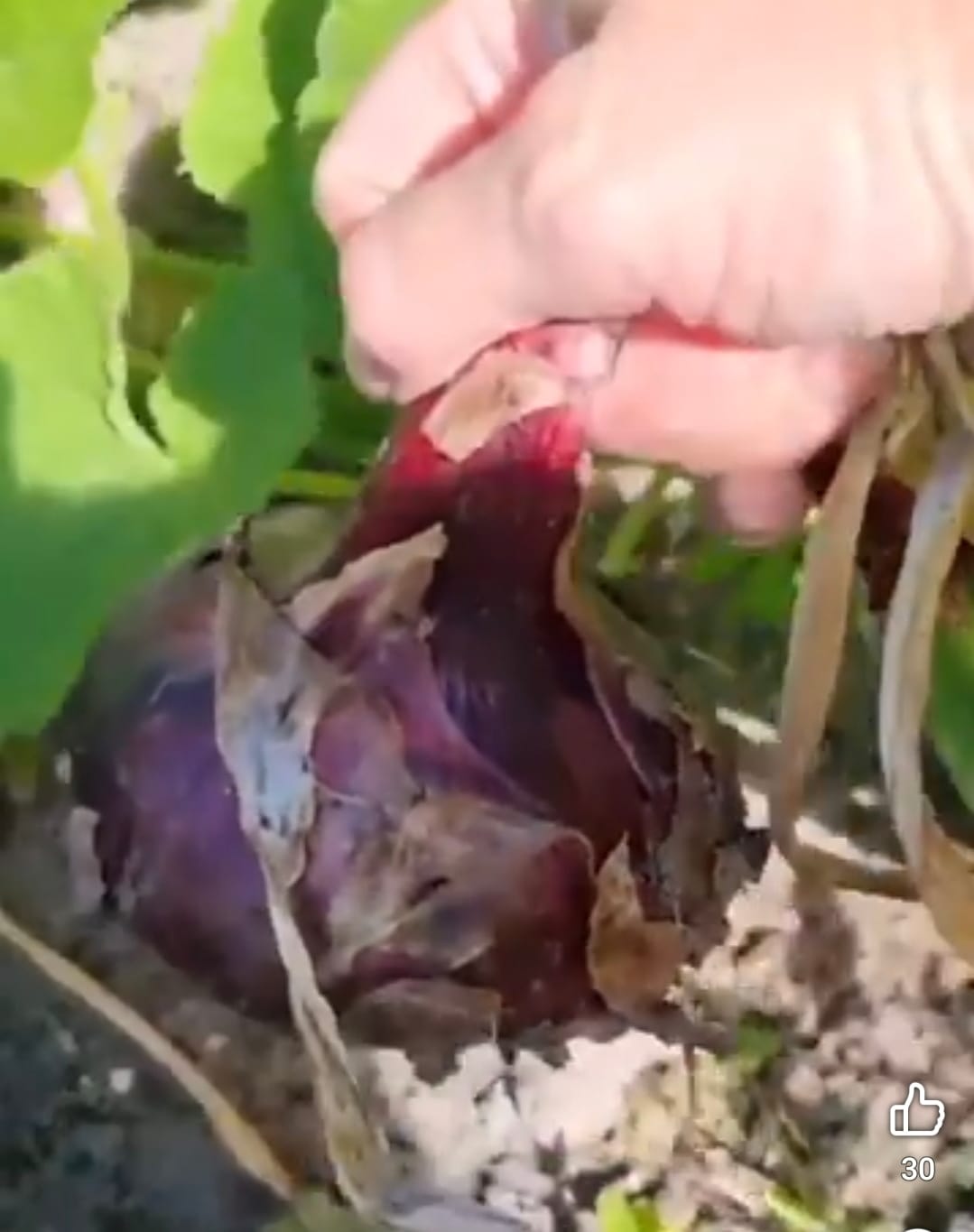
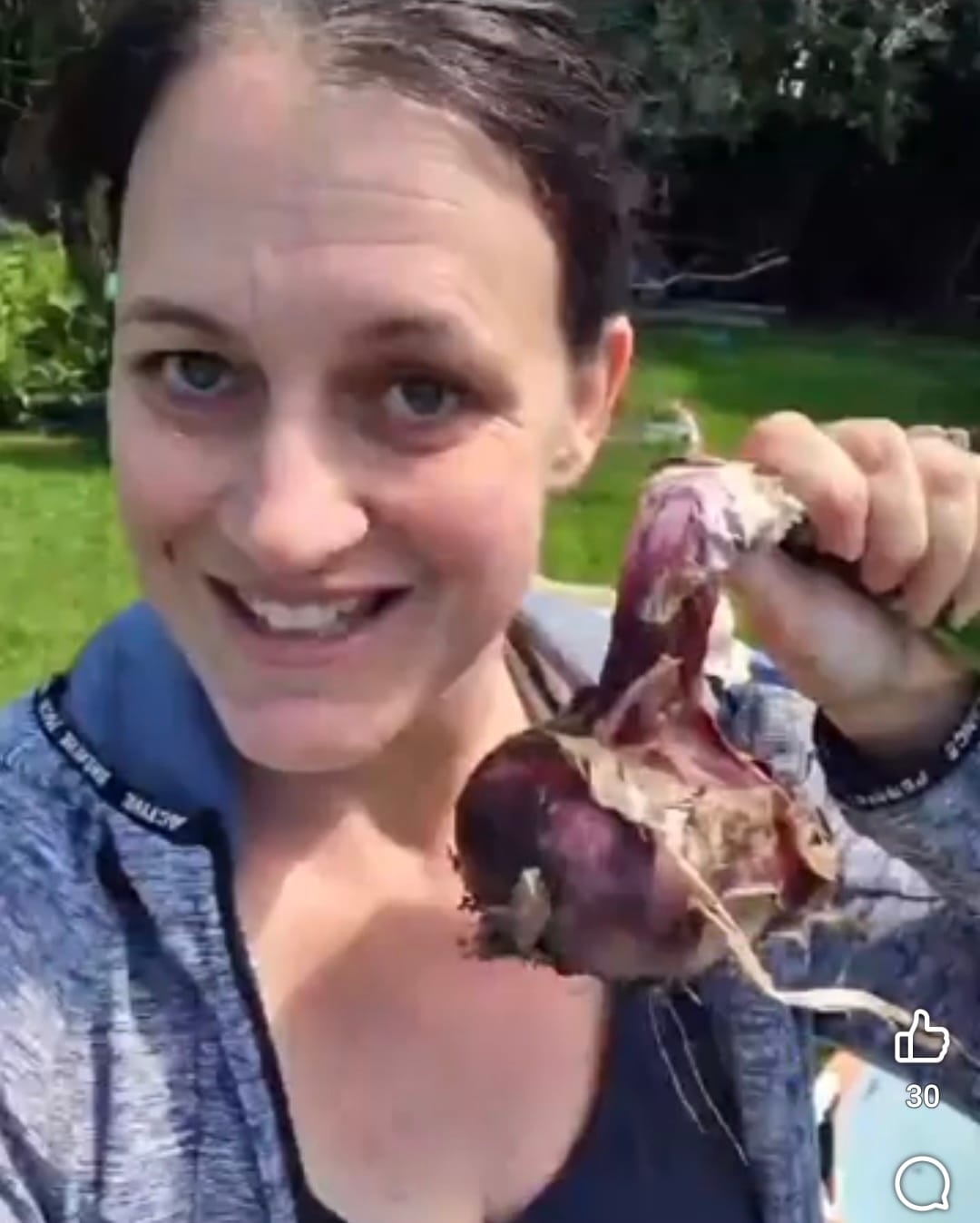
Someone in a gardening group had planted peas and onions together and wasn't sure what to do which sent me down a rabbit hole of why that pairing is often discouraged in the first place.
This is where gardening gets interesting: a rule like "never plant these together" often has a more nuanced story underneath. In this case, it seems to come down to competition for space and resources, plus taller peas shading out lower-growing onions. Rather than treating it as an absolute, I found myself thinking in terms of buffers - how close are they, where are the roots, what are they actually competing for, and does more space solve it?
I'm far more interested in understanding why something works than memorising a list of do's and don'ts.
Then There's the Moon
I've followed moon cycles in my own personal and healing practice for years, and I've been wanting to bring that awareness into the garden more deliberately.
Gardening by the moon is an old practice, and traditions vary, but a common thread associates waxing phases with above-ground crops and waning phases with root crops. Prompted by a post in the Self Reliance Family Food NZ Facebook group, I sowed peas and spinach according to the lunar guidance I'm following, and not just in one spot. I planted them across five different areas of my garden.
Now I get to watch and wonder: which patch performs best, and why? Soil, sunlight, shelter, moisture, neighbouring plants, microclimate or is there something to the timing of the moon too? I'm not running a scientific trial to "prove" anything. I'm simply already drawn to this practice, and curious what close attention reveals. Onion seeds are next, timed for the waning phase.
What I've Been Planting
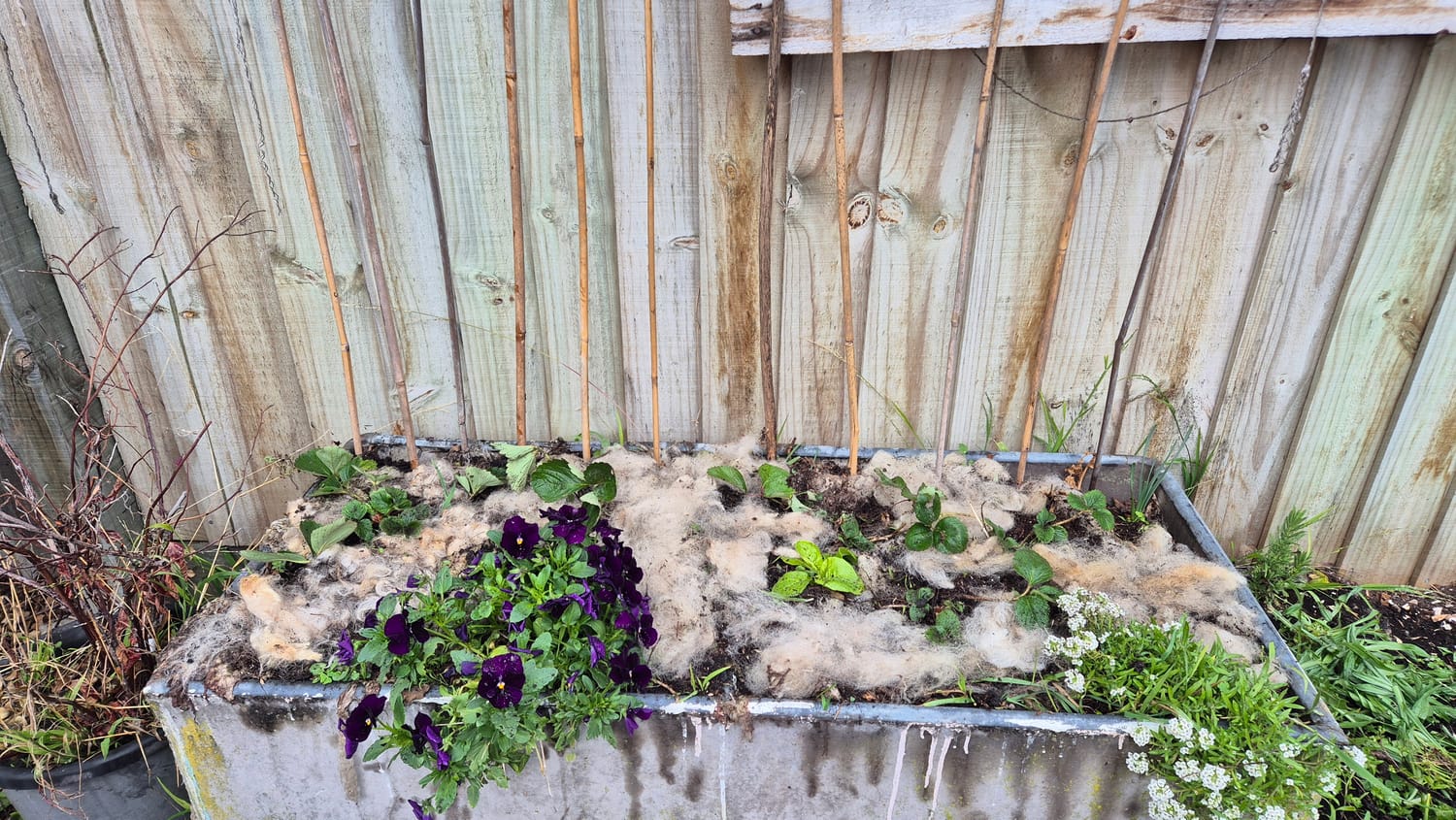
Stakes for the peas to grow up, strawberries and lettuce in front.
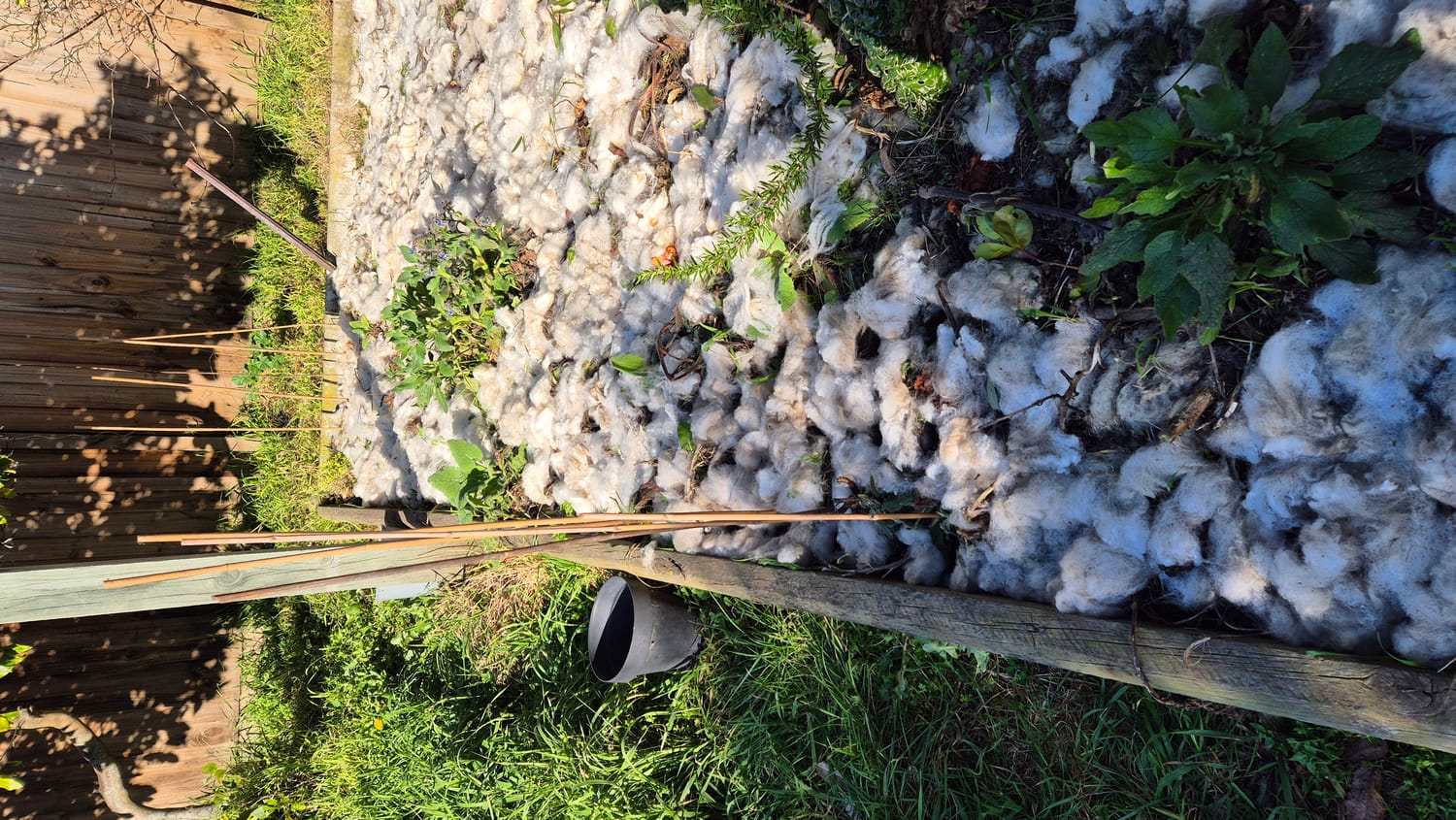
Again stakes for the direct sown pea seeds to grow up, direct sown spinach seeds in front of them.
Alongside all that, I've been experimenting with companion planting more broadly - strawberries, peas and lettuce together, and peas and spinach sown side by side in different beds.
I'm shifting away from thinking of my garden as separate blocks ("here's the pea bed, here's the lettuce bed" monocropping doesn't help anything grow well btw) and toward thinking in relationships: what shades what, what occupies different soil depths, what draws in beneficial insects, what makes the best use of the space available. It ties directly into the regenerative agriculture research I've been doing - the more I read, the clearer it becomes that it's not about one clever technique. It's about relationships between plants, soil, insects, water, people, and the wider ecosystem.
And Then There Was the Rosemary
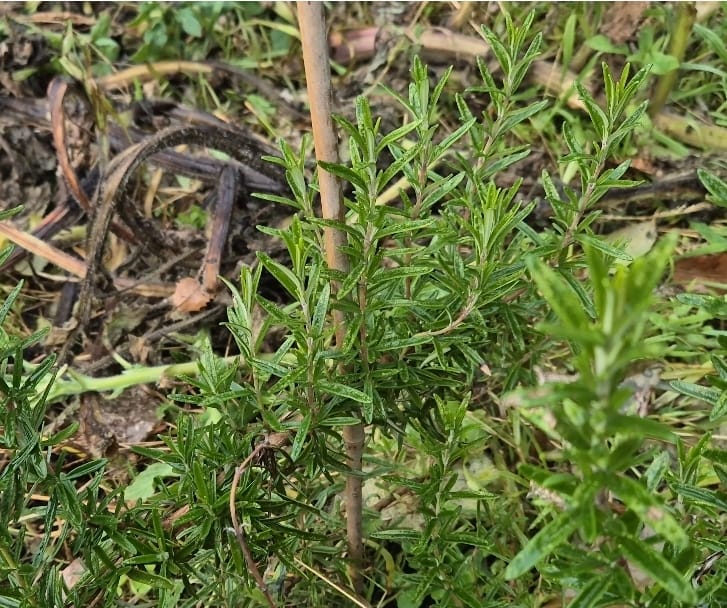
Before sowing peas near an existing rosemary plant, I actually stopped to check compatibility first - not after the fact. I'm trying to build that habit: research first, experiment second, observe what actually happens. Blanket statements like "never plant X with Y" often turn out to be more nuanced once you dig in.
A Lemon Tree, Some Alyssum, and a Different Way of Thinking
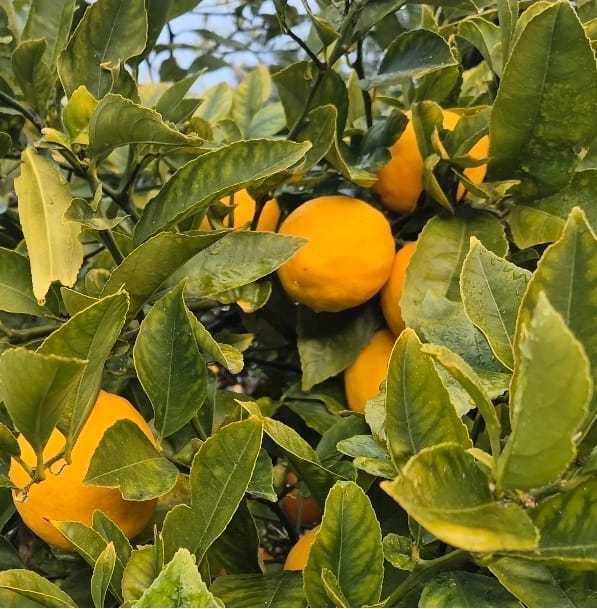
Someone else posted about an unhealthy lemon tree, likely dealing with sap-sucking pests. Instead of jumping straight to a spray, I found myself asking bigger questions: can we invite in beneficial insects, improve airflow, boost nutrition, support the ecosystem rather than just targeting the pest?
I suggested planting alyssum nearby as part of that wider approach. I'm deliberately building a non-spray garden - not because pests are the enemy, but because I want enough biodiversity and enough relationships in the space that things find their own balance.
So What Did My Garden Teach Me This Week?
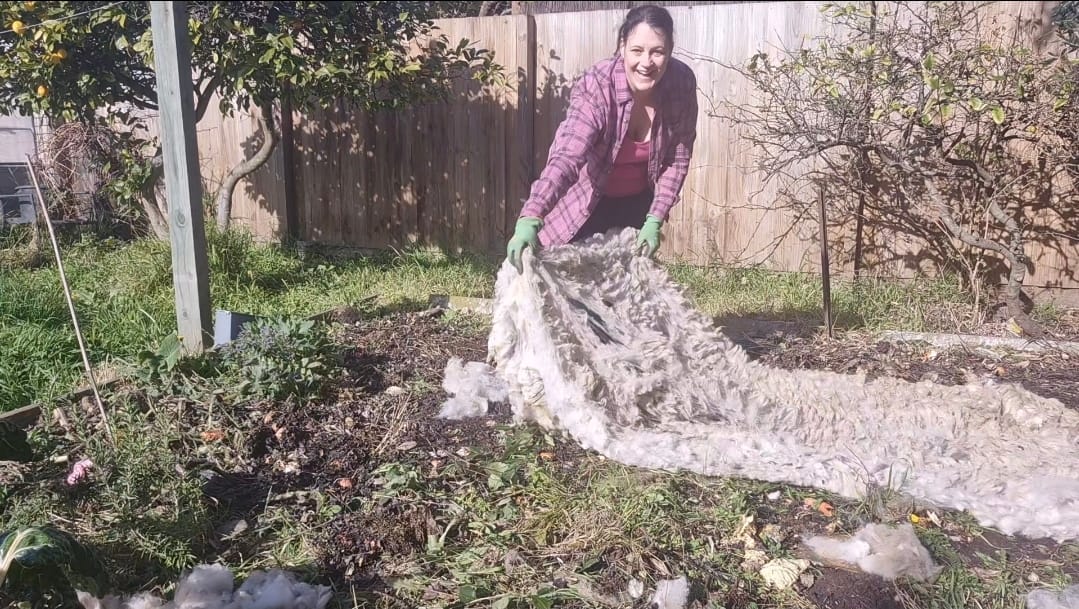
Mostly this: gardening is becoming less about finding the answer, and more about asking better questions.
Not "can I grow peas here?" but "what happens if I do?"
Not "are peas and onions companions?" but "why might they compete, and does spacing change that?"
Not "does gardening by the moon work?" but "what do I notice if I follow it consistently?"
Less do this, don't do that, more let's try it, let's observe, let's learn.
What I'm Watching Next
Next week: checking in on those five pea-and-spinach patches, sowing onion seeds by the moon calendar, and seeing what's actually germinating in my snaplock bags. And no doubt another dozen rabbit holes I haven't fallen into yet.
Until next time - keep growing, keep observing, and keep asking questions.
Listen to the full episode: [Listen here]
Watch on YouTube: [Watch here]
Created with ©systeme.io• Terms & Conditions | Privacy Policy